


Kidill Spring Summer 24
Kidill Spring Summer 24
The continuous process of creation is clearer than ever that punk for Hiroaki Sueyasu is just not a style, but rather a state of mind and attitude. He sees the essence in fashion as an emotional outpouring of a sense of personal “life” that encompasses anguish, desire, sorrow, and anger, which coexists with the perspectives of disobedience, rejection and restraint, action, anti-industry, and DIY-ism, connecting the perspective of how we breathe in the mundane world and live with our heartbeat, being instinctive.
Непрерывный процесс творчества как никогда ясно показывает, что панк для Хироаки Суэясу — это просто не стиль, а скорее состояние души и мироощущение. Сущность моды он видит в эмоциональном излиянии чувства личной «жизни», которое включает в себя страдание, желание, печаль и гнев, которые сосуществуют с перспективами непослушания, отвержения и ограничения, действия, антипромышленности и самодеятельности. изм, соединяющий перспективу того, как мы дышим в обыденном мире и живем с биением сердца, будучи инстинктивными.
Confronted with a world in which the dichotomy of good and evil crumbling with a deafening sound, a world drowning in uncertainty, and a modern society infested with anonymous people, the designer says that he has an honest urge to “return of his senses without getting caught in the midst of any commotion”. Evident in the SS24 collection, a unmalicious rebellion against algorithms and the majority, the return to his initial impulse of the DIY creativity, he has found “the very value of craftsmanship that is not to be imitated and irreplacable” --the multilayering of silhouettes and details depicts traces of his hands moving on the impulse that resists on existing ideas.
Столкнувшись с миром, в котором дихотомия добра и зла рушится с оглушительным звуком, миром, утопающим в неопределенности, и современным обществом, кишащим анонимными людьми, дизайнер говорит, что у него есть искреннее стремление «возвратить свои чувства, не теряя сознания». застигнутый посреди любого смятения». В коллекции Весна-Лето 24, беззлобном бунте против алгоритмов и большинства, возвращении к своему первоначальному импульсу творчества «сделай сам», он нашел «саму ценность мастерства, которое нельзя имитировать и которое невозможно заменить» — многослойность силуэтов. и подробно изображает следы его рук, движущихся по импульсу, противостоящему существующим представлениям.
Being “a minority of the whole” is one of the characteristics that Sueyasu will revere, shared by all the entities that inspires him on his creation. Hardcore and youth culture players, the bearers of anarchism and the new left whose cult art and music encompass a small number of ardent followers, the London punk boys who drove a wedge into a tasteless scene - the challenge of the “heretics” trying to create a new field. The “heretics” (HERESIE CHILDREN) attempting to build the new field are the incarnation of the antithesis, dissenting with a sense of ties that are embedded in the world.
Быть «меньшинством целого» — это одна из характеристик, которую Суэясу будет уважать, разделяемая всеми сущностями, которые вдохновляет его на его творчество. Хардкорные и молодежные игроки культуры, носители анархизма и новые левые, чье культовое искусство и музыка охватывают небольшое количество ярых последователей, лондонские панки, вбившие клин в безвкусную сцену – вызов «еретиков», пытающихся создать новое поле. «Еретики» (ДЕТИ ЕРЕСИИ), пытающиеся построить новое поле, являются воплощением антитезиса, несогласного с чувством уз, укоренившихся в мире.
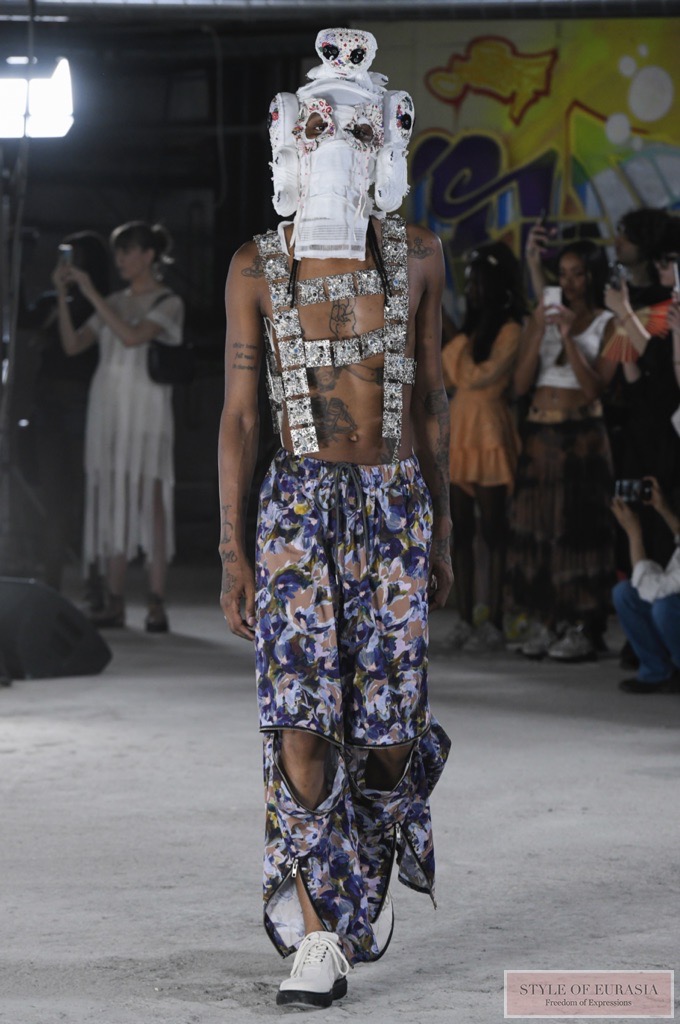
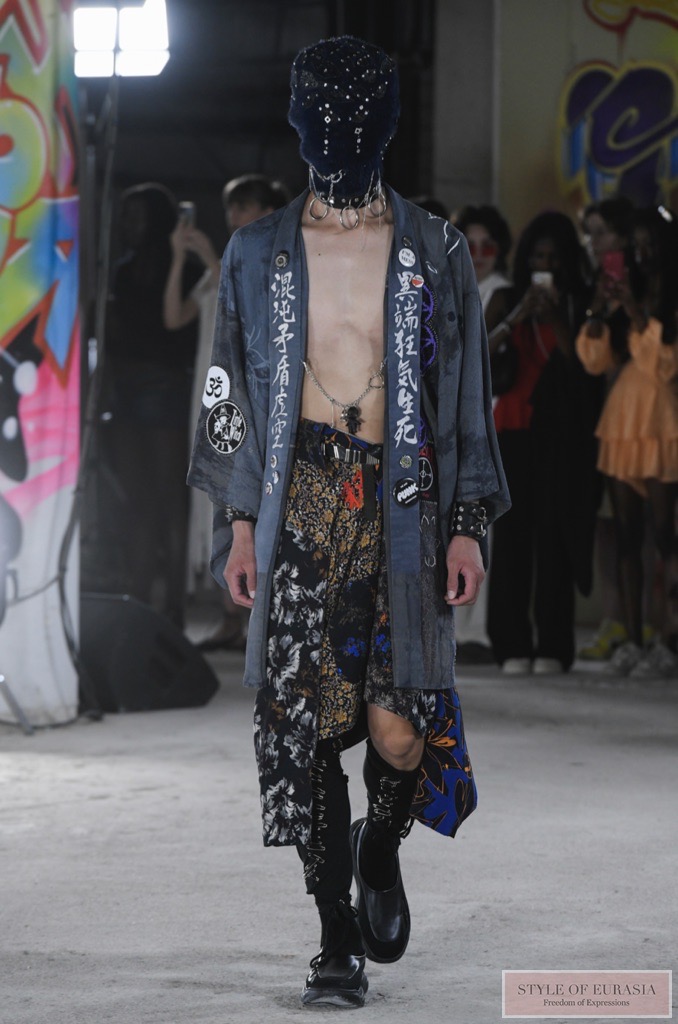
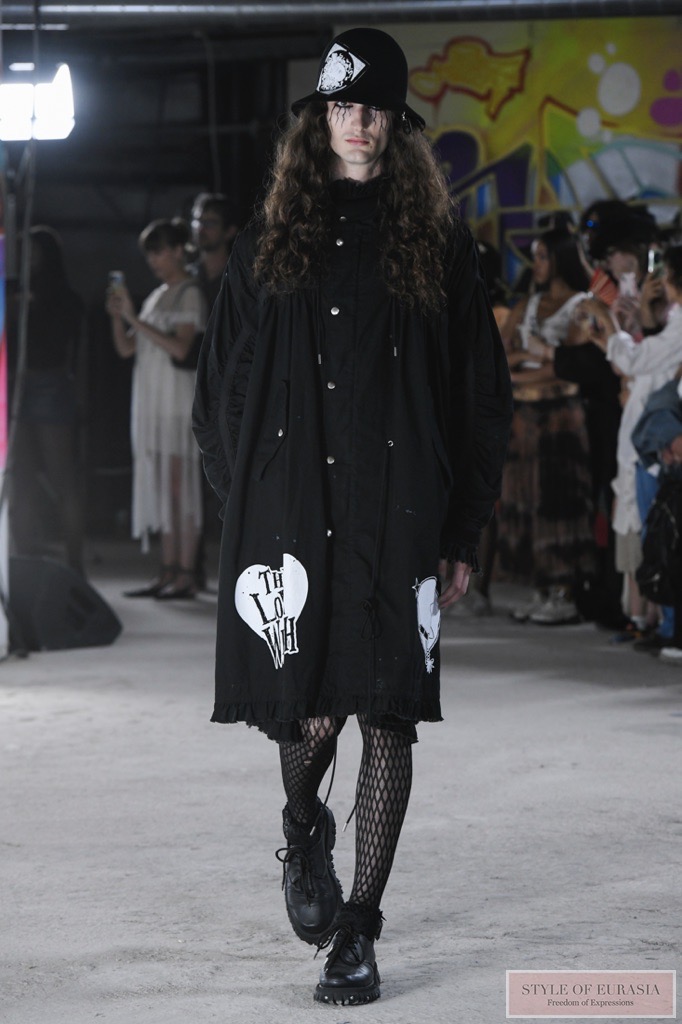
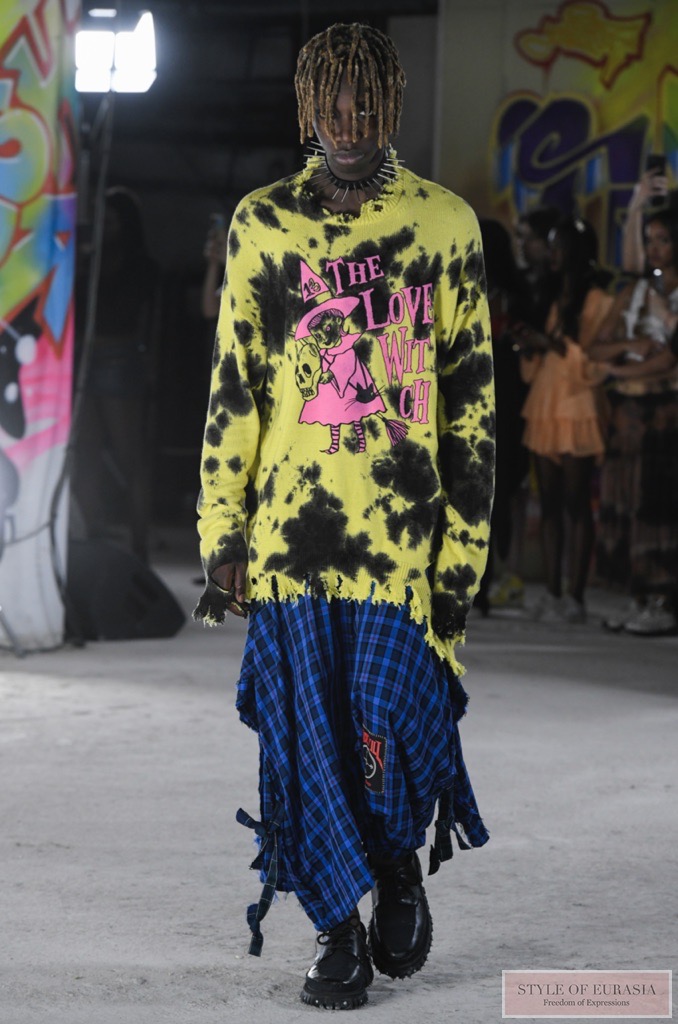
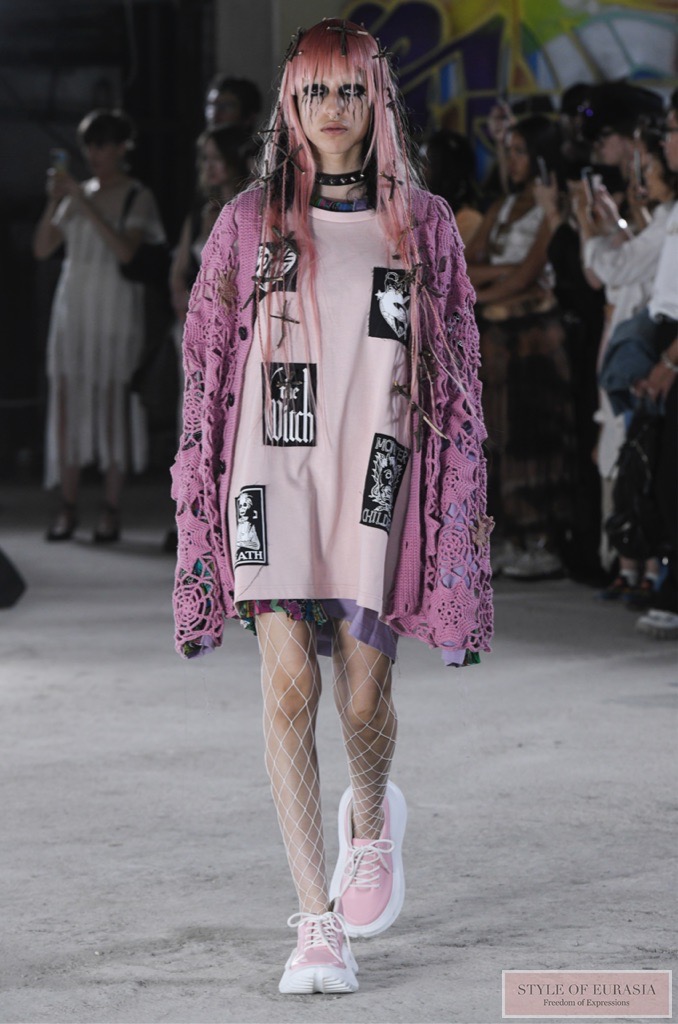
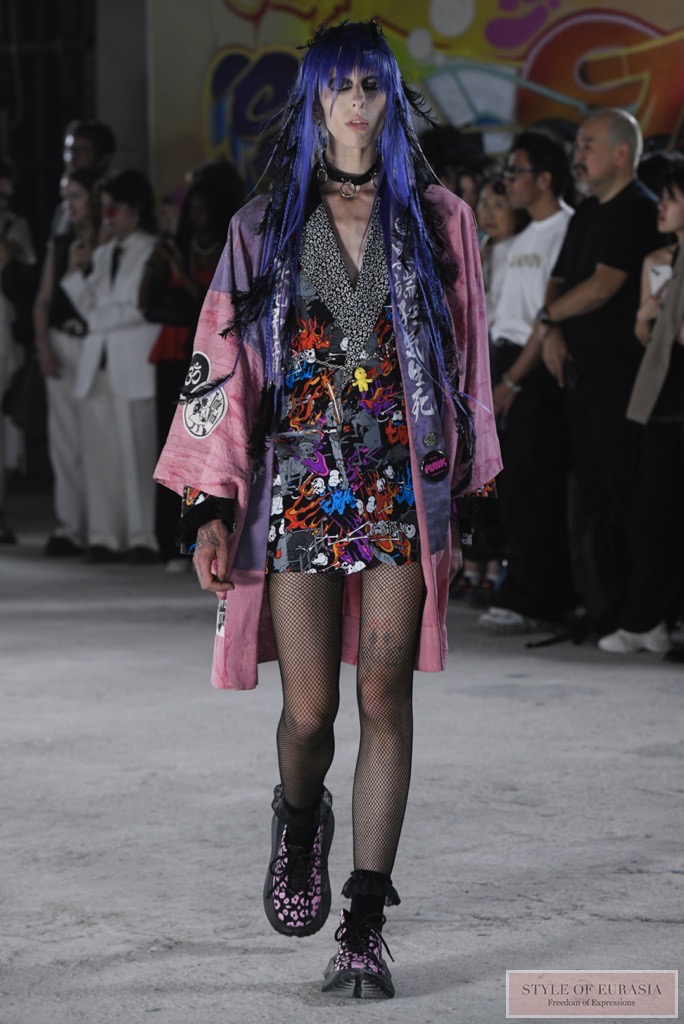
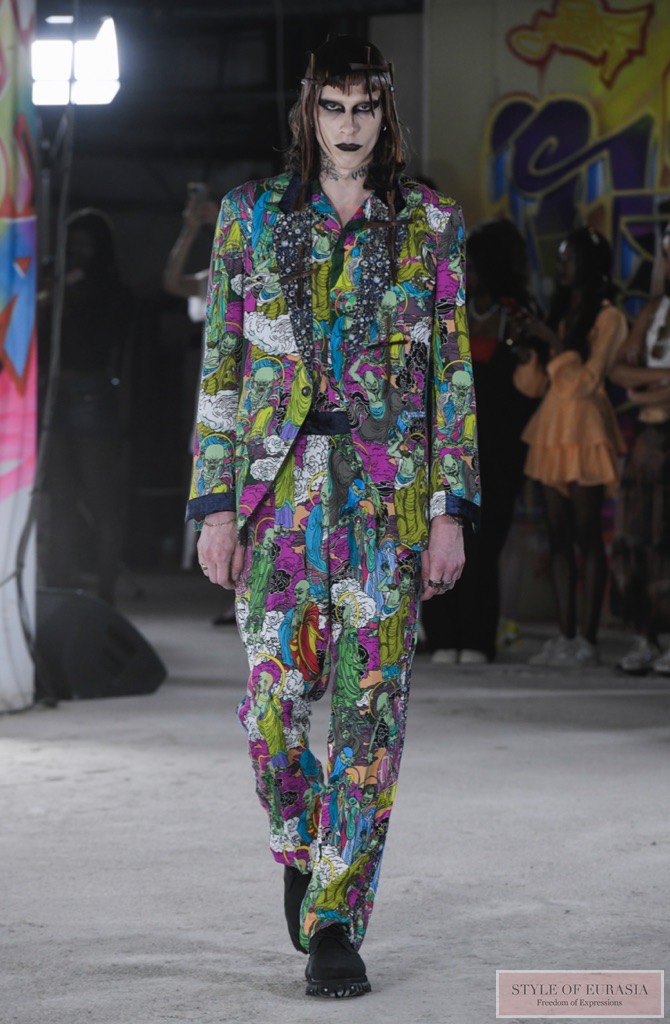
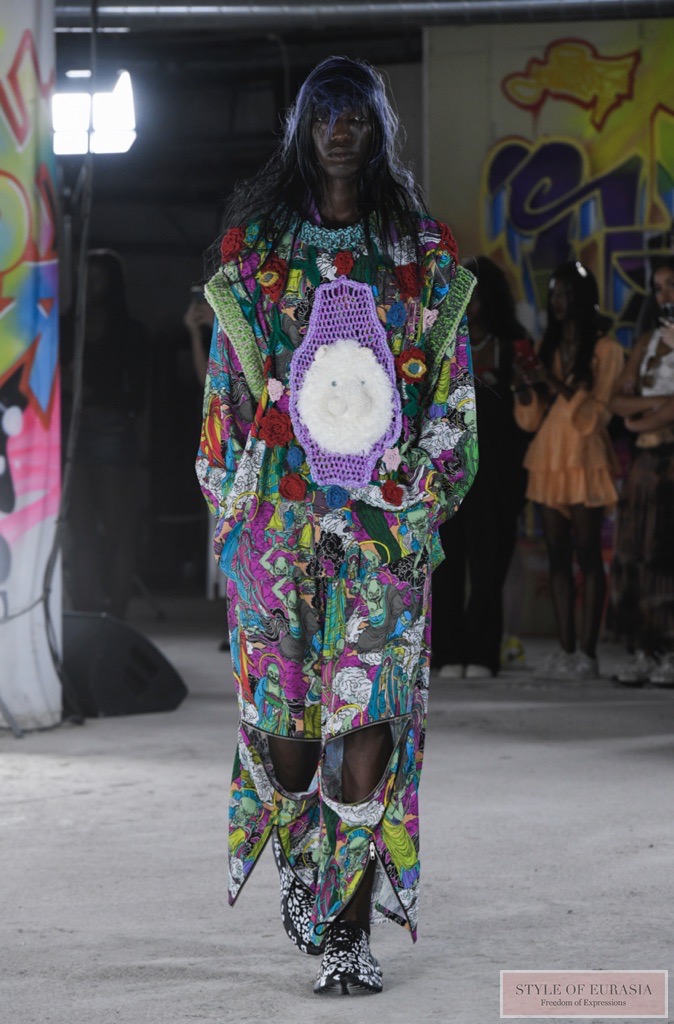
Moreover, a perceptual reading of punk ideology leads Kidill’s collection more outward from the classical Parisian theology of fashion. Sueyasu's focus on the idea of the “minority spirit or ideology” and the satanism of these studies are wittily cited in the graphics, textiles, and handcrafted headpieces that characterize the collection. Widely occuring from the 16th to the 18th century, the “witches” at the center of the Moral Panic movement, widespread during this time, were not only misunderstood and prejudiced as deviant and a threat to society at large, but were also considered dangerous under the monarchy as objects of oppression and ostracism. Sueyasu describes how the small but strong community of witches who shared their secrets, “known only to the known,” that have sometimes banded together to resist oppression, even at the cost of their own lives, must have contained an extraordinary life force. These connected to the Boro technique of patching pieces together to protect themselves from the intense cold, Sueyasu expresses his determination to continue to challenge for his own freedom and projects the future of his brand on the “value of heresy.”
Более того, перцептивное прочтение панк-идеологии отдаляет коллекцию Кидилла от классической парижской теологии моды. Сосредоточение Суэясу на идее «духа или идеологии меньшинства» и сатанизма этих исследований остроумно цитируется в графике, тканях и головных уборах ручной работы, которые характеризуют коллекцию. Широко распространенные с 16 по 18 века, «ведьмы» в центре движения моральной паники, широко распространенного в то время, не только были неправильно поняты и предвзяты как девианты и угроза обществу в целом, но также считались опасными при монархия как объект угнетения и остракизма. Суэясу описывает, как небольшое, но сильное сообщество ведьм, которые делились своими секретами, «известными только известным», которые иногда объединялись, чтобы противостоять угнетению, даже ценой собственной жизни, должно было содержать необычайную жизненную силу. Это связано с техникой боро, соединяющей части вместе, чтобы защитить себя от сильного холода, Суэясу выражает свою решимость продолжать бороться за свою свободу и проецирует будущее своего бренда на «ценность ереси».
-
 Click to open image!
Click to open image!
Click to open image!
-
Click to open image!
Click to open image!
-
Click to open image!
Click to open image!
-
Click to open image!
Click to open image!
-
Click to open image!
Click to open image!
-
Click to open image!
Click to open image!
-
Click to open image!
Click to open image!
-
Click to open image!
Click to open image!
https://www.styleofeurasia.com/podium-1/item/2813-kidill-spring-summer-24#sigProGalleriac46d087903
Related items
- Around 200 Guests Attend the Opening of the "Friend" Exhibition in Almaty
- HUAWEI Unveils the New Flagship Pura90s Series in Almaty
- SCANDALE: A New Chapter Begins for the Legendary French Lingerie House
- Almaty Youth Forum 2026 Showcases the Next Generation of Central Asia's Leaders in AI, Climate Innovation and Social Impact
- PRESSIAT Brings Together Friends of the House During Paris Haute Couture Week


